Tuesday, October 8, 2024
The Articles of Dragon: "Thieves' Cant: A Primer"
Tuesday, June 27, 2023
White Dwarf: Issue #79
This issue marks the first one featuring Paul Cockburn as editor. His inaugural editorial mentions that there will be still more changes in store for the magazine, though these will "come in bit by bit." Cockburn also notes that Citadel Miniatures would, from this point on, include "a small warning, intended to prevent figures being sold to that part of the public who might actually be harmed by lead content." He elaborates that there had recently been a Citadel ad in a magazine "aimed at a very young audience," which necessitated this warning. Maybe I'm just old and contrarian, but I felt a slight pang of sadness upon reading this. By 1986, the Old Days (and Old Ways) were already fading ...
"Open Box" takes a look at two related Palladium products, Teenage Mutant Ninja Turtles and Other Strangeness and its post-apocalyptic supplement, After the Bomb. Both products are positively reviewed, but the reviewer, Marcus L. Rowland, expresses a preference for the "present day setting of the original game," which he feels offers "more opportunities for plot development and diversity." Also reviewed is Secret Wars II for Marvel Super Heroes, which is judged "an awful lot better than Secret Wars I." Never having seen the original, it's not clear to me whether this is faint praise or not. Two Chaosium releases, Black Sword (for Stormbringer) and Terror from the Stars (for Call of Cthulhu) get positive reviews, as does West End's Ghostbusters. Acute Paranoia, a supplement for (naturally) Paranoia earns a more middling appraisal, largely due to its "disappointing" mini-scenarios.
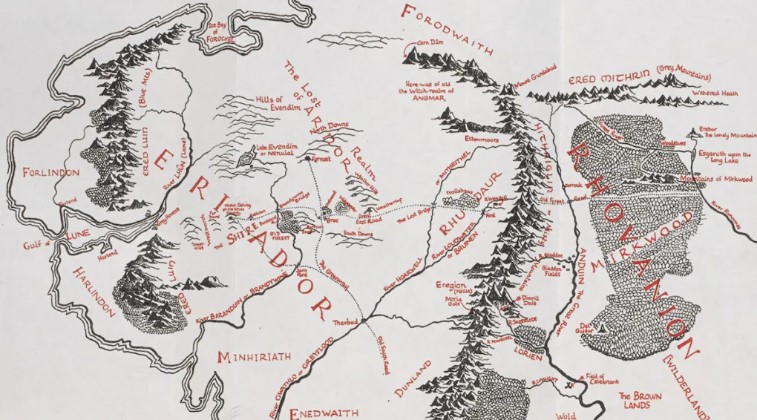
"Where and Back Again" by Graham Staplehurst is one of the aforementioned bright spots of this issue. Dedicated to "Starting a Middle-earth Campaign," the article lays out all the decisions a referee looking to run a RPG campaign set in Tolkien's world must make. Staplehurst covers subjects like "style" (i.e. campaign frame), rules, and even source material. He also raises the question of how closely one might wish to hew to Middle-earth as described by the good professor and the consequences for choosing to deviate from that particular vision. It's a solid, thoughtful article on a topic that has long interested – and vexed – me.
Dave Langford's "Critical Mass" has only rarely been something I've enjoyed and this issue's installment does little to change my mind. More enjoyable (to me anyway) is his second contribution to the issue, an odd little article entitled "Play It Again, Frodo." Ostensibly, Langford's assignment is to demonstrate "how closely role-playing and literature are entwined" in order to help readers convince their "serious" friends that gaming isn't a silly hobby. He attempts to do this through a series of vignettes based around famous books or movies – Star Wars, Indiana Jones, Conan, The Lord of the Rings, etc. – where he postulates that events go other (and humorously) than how they do in the originals. The idea here is that roleplaying allows to do things "your way" rather than being bound by the dictates of an omnipotent author.
"20-20 Vision" by Alex Stewart reviews science fiction and fantasy movies. The bulk of this issue's column is devoted to the film, Highlander, in which "a medieval Scottish warrior with a French accent" is befriended by "Sean Connery's Glaswegian conquistador." Stewart calls the movie "a stylish, raucous and utterly preposterous D&D scenario transplanted bodily into contemporary New York." That's probably the most succinct (and amusing) way I've heard Highlander described and it does a good job, I think, of capturing the essence of its cheesy glory.
"All in the Mind" by Steven Palmer offers an alternate psionics system for use for AD&D. Palmer's system interests me for its relative simplicity – the article is only four pages long, as well as for its more flavorful elements. For example, there's a discussion of the heritability of psionic powers, as well as the inherent connection between twins. Neither of these elements plays a major role in his system, but the fact that they're mentioned at all is in stark contrast to the dreary, tedious treatment of psionics in the Players Handbook.
"Ghost Jackal Kill" by Graeme Davis is a Call of Cthulhu scenario that's presented as a prequel to The Statue of the Sorcerer, a Games Workshop CoC adventure. The scenario is set in San Francisco and involves not only the Hounds of Tindalos, one my favorite type of Mythos entities. It also features real-world historical figures, specifically the actress Theda Bara and writer Dashiell Hammett. Normally, I tend to be leery of the inclusion of such people in RPG adventures, but, in this case, I think it works, particularly Hammett, who did actually work as a detective for the Pinkertons and drew on those experiences for his fiction. In any case, it's a good, short scenario and another of the issue's stand-outs in my opinion.
"Think About It" by Phil Masters examines the purpose and use of the Intelligence score (or its equivalent) in roleplaying games. Because it's an overview of a large topic, it's necessarily brief in its examination, but it does a good job, I think, of presenting different options and approaches to handling Intelligence in RPGs. "'Eavy Metal" provides tips on converting miniature figures, along with some nice color photographs.
"Psi-Judges" by Carl Sargent – a name that would feature prominently on the covers of many RPG products throughout the late '80s and into the 1990s – is an expansion of Judge Dredd: The Roleplaying Game focused on, of course, psi-judges. Interestingly, it's equal parts a rules expansion and a roleplaying expansion. There's information on how to play a psi-judge in the game, alongside discussions of game balance and other matters. "Gobbledigook" and "Thrud the Barbarian" are still here, but I can't deny that I miss the presence of "The Travellers." The comic's absence really hits home to me just how much White Dwarf has changed from the days when I read (and enjoyed) it regularly.
One more week!
Monday, September 26, 2022
My Top 10 Favorite Imaginary Settings (Part I)
My recent retrospectives of both Dragonlance Adventures and Greyhawk Adventures got me thinking about my favorite settings for roleplaying games, which, in turn, got me to thinking about my favorite imaginary settings in general. Before long, I realized that I had the makings of a couple of posts in which I listed, in order, my favorite imaginary settings, along with some thoughts on how I first encountered them and why I still like them. Like all my previous lists of this sort, this one is intentionally personal. It's not intended to pass judgment on these or any other imaginary settings in any absolute sense. If your favorite isn't to be found here, that only means that you and I have different tastes, nothing. I doubt there will be many surprises here for long-time readers, except perhaps the order in which I rank the various settings I've chosen.
10. Middle-earth
Monday, September 19, 2022
Terrifyingly Beautiful
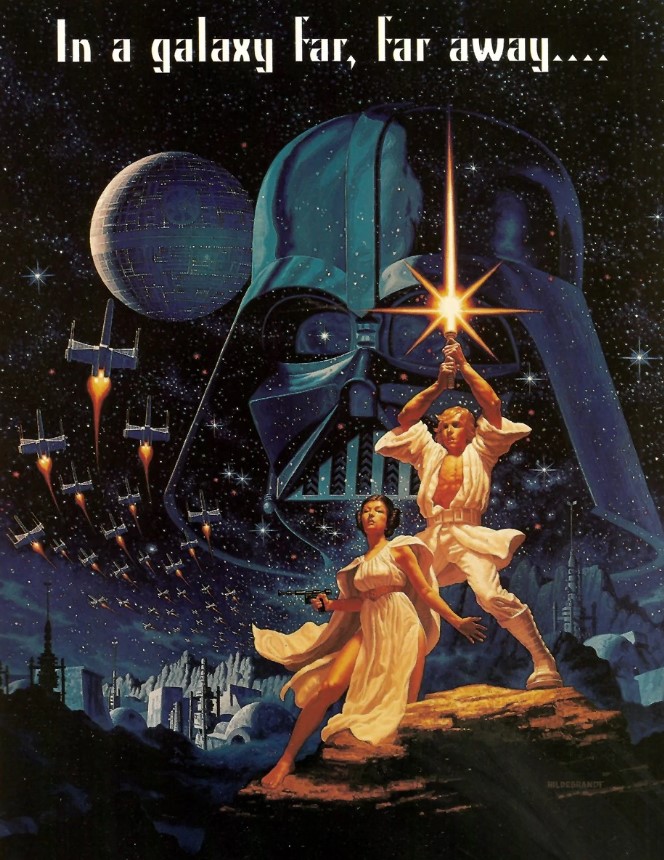
If you were into fantasy during the 1970s, you were almost certainly familiar with the artwork of Greg and Tim Hildebrandt, generally known as the Brothers Hildebrandt. Today, they're probably most remembered for their various Lord of the Rings calendars (the first of which appeared in 1976) and the covers to the Shannara novels of Terry Brooks, but I suspect the first of their paintings I ever saw was this one:
Wednesday, December 23, 2020
Retrospective: Middle-earth Role Playing
Originally published in 1982, Middle-earth Role Playing is an odd game. As the cover of the first edition proclaims, MERP is "a complete system for adventuring in J.R.R. Tolkien's world," that system being based on Iron Crown's Role Master system, with which I was already somewhat familiar. Had I been asked beforehand, it's not the system I'd have chosen for gaming in Middle-earth, but I doubt I could have explained why at the time. Role Master always struck me as much too complex and finnicky, especially in the area of combat, and this seemed at odds with the overall feel Tolkien's works evoked. Furthermore, it was supposedly set in the middle of the Third Age, some 1500 years before the events of The Lord of the Rings, which is not what I had been expecting. I imagine the period was chosen for maximum freedom, since it's not as well documented as other periods of Middle-earth's history.
The cover image accompanying this post is quite instructive. Depicting a multi-racial adventuring party looting what appears to be a tomb, it looks more like a scene from a D&D game than something one would find in Tolkien. At the time, that didn't bother me very much, because I was much more a fan of Tolkien's world than I was of Tolkien's stories. In that respect, MERP did its job well enough: it provided all the things one would expect to find in Middle-earth – dwarves, elves, hobbits, orcs, etc. – and didn't worry too much about the tone. For example, MERP had extensive rules for magic, as well as allowing characters of every profession, including warriors, to learn spells. As Gary Gygax famously complained, Middle-earth is notably low-key in its magic, but not so MERP. It's a very peculiar decision on the part of the game's designers, if fidelity to Tolkien were one of the game's key principles. On the other hand, if their goal was to use Middle-earth as the backdrop for more typical fantasy RPG activities, it makes perfect sense.
Since my friends and I weren't overly concerned with fidelity to Tolkien's literary works, none of this bothered us in the slightest. Much more important was the fact that we could create hobbits and elves and Dúnadan rangers and visit Mirkwood and Moria and all the other amazing locations described in The Hobbit and The Lord of the Rings. There were orcs and spiders to be fought and great treasures to be won, all against the backdrop of a rich setting for which ICE provided some truly inspiring maps. Sure, our adventures didn't materially differ all that much from what we'd done in our Dungeons & Dragons sessions, but what did it matter? At that point in our roleplaying development, we were simply enamored of being able to use Tolkien's words, names, and locales and any more sophisticated concerns would have to wait.
In that respect, Middle-earth Role Playing gave us just what we wanted at the time, even if, in retrospect, it seems clear to me that MERP wasn't particularly well suited to its source material. I know many gamers of a certain vintage have great fondness for the game, in part, I think, because of the aforementioned maps and the Angus McBride artwork that graced the covers of the second edition of the game (which I never owned). There are worse reasons to have affection for a RPG, honestly, but I can't help but feel that MERP was something of a missed opportunity. Middle-earth holds so much potential as a fantasy roleplaying setting and one day I'd love to play in or referee a campaign set in it.
Monday, November 9, 2020
Lessons from Tolkien
Monday, September 14, 2020
The Covers of The Lord of the Rings
Wednesday, July 21, 2010
Interview: Paul Jaquays (Part I)
1. How did you become involved in the roleplaying game hobby?
I found RPGs by way of my younger brother's subscription to The General magazine. In the fall of 1975, I was working an evening shift at my college's radio station. The station played a lot of pre-recorded content, so I had nothing much to do between program changes. So when my younger brother Bruce called and told me about a sample magazine copy he had received called The Space Gamer (issue #2) I had time to listen. He proceeded to read me two reviews of a new game called Dungeons & Dragons. In looking back at one's life, one can usually find significant events that change the direction your life will take thereafter. This was one of those moments.
Hearing the game described, I knew I had come across something that I had been looking for since childhood ... a way to play out adventure fantasies like those in Conan, The Lord of the Rings and the Fafhrd and Gray Mouser stories. I immediately ordered the rule sets and as many expansions as they had available. (Greyhawk, and maybe Blackmoor). I also dashed off some quick illustrative sketches for the magazine, my first submissions to a game publication of any kind. Greyhawk (and, I think, Chainmail) arrived in time for us to pore over them at the Thanksgiving break, but the rules didn't arrive until January of 1976 when I was out of the country on a school trip (I arrived home to discover that my brother and my buddies had gotten started without me). Within six months we were not only playing OD&D regularly with several DMs, but had also begun publishing our own game fan magazine, The Dungeoneer.
2. You mention The Dungeoneer, which is notable for not only being one of the earliest fanzine for D&D but also for having published some of the earliest adventures for the game. Looking back on it now, what contributions to it make you the most proud?
It's the adventures that stand out, and not simply because no one else was doing mini-adventures in 1976. When I read comments about the magazine or talk to fans (old and new), no one talks about the monsters, or the art, or the magic items and rules variants. It's always the adventures. I'm both flattered and honored when I read that gamers are constructing full campaigns around settings like "Night of the Walking Wet."
Second, it's that we were able to publish as many issues as we did back in a time when we (my gaming group) were all going to school full time, working at least part time, and trying to actually fit in gaming time. I know it's "get off my lawn" type talk, but I had to assemble the pre-press for every one of those magazines with rubber cement from typewriter-created galleys, PMTs (photo-mechanical-transfers of art), and sometimes the original art pieces themselves, and of course, press-on type for headlines.
Finally, it was something that I could do with my friends. I was the only member of that group to go on to a full time creative career, but my friends like J. Mark Hendricks, Merle Davenport, and artist Aaron Arocho still have their names memorialized in the hearts of Old School Gamers.
3. When did you decide you were interested in working professionally in the RPG field?
Almost immediately, I recognized that the RPG industry needed artists desperately and that this was a way to get my art published. Even before I started playing RPGs, I submitted sketches to The Space Gamer for publication. By the time I graduated from college, I had illustrated two microgames for Metagaming, been published in the first issue of Dragon magazine and numerous The Space Gamer issues, and was publishing my own D&D fan magazine.
In the spring of 1978, a couple months before graduation, I flew from Michigan to Texas to interview with Metagaming Concepts. They were considering bringing me on staff as an artist. After I returned to school, they let me know that they were going to hire a secretary instead (or perhaps another secretary as I remember several pretty young blonde girls being associated with the Metagaming offices). There were also some apologetic comments about them being atheists and me attending a Christian college. Not something you can say regarding a job interview these days, that's for sure.
After graduation, I tried to a pursue a more traditional commercial art career, ending up as a full time layout and paste-up artist for a quick-printer that had been my part-time employer during school. That job was brief. The city had blocked off the street on which the printer was located, eliminating all but foot traffic ... and soon my job with it. I no longer remember the specifics, but Chuck Anshell, who had purchased The Dungeoneer from from me and then taken it Judges Guild, arranged for me to come down and interview. I drove from Jackson, Michigan to Decatur, Illinois. I accepted the offered job (and the minimum wage paycheck it entailed), but only if I could continue to work out of my apartment in Michigan.
4. You're probably most famous in D&D circles for your Judges Guild work, particularly Dark Tower and the Caverns of Thracia. Do you have any particular memories about creating those two adventures?
I remember beginning to plan out bits of the adventure for Dark Tower while on the day long drive back from that first trip to Decatur, Illinois. Later, when I was home, I scrounged through my own game dungeons to cull the best "special" encounters for Dark Tower (other encounters ended up going into Morkendaine Manor, which I wrote for The Dungeoneer that fall). The whole Set vs. Mitra theme was greatly inspired by Conan the Barbarian fiction. I think the Conan story, "Red Nails," may have had some influence on the theme also, with it's rival bands warring within an ancient, enclosed space. I've always been fascinated by archaeology and the idea of excavating ancient ruins and finding them nearly intact. So I extrapolated that to a pair of opposing towers dedicated to opposing gods and then buried by some catastrophe.
Later, adherents of both faiths would excavate the buried towers and renew the battle. While many of the bits in Dark Tower came from my imagination, at least one was inspired by an encounter that designer Kerry Lloyd (of Thieves Guild fame) described during a visit to my home. He talked about a ring-shaped hall filled by a giant moving ball (think of the rolling stone ball in Raiders of the Lost Ark - which this predated by two years). The tomb of Racox in the dungeon is a tribute to my college buddy and fellow gamer (and room mate at the time), Randy Cox. And no, he didn't die.
During the development of Dark Tower, I had a meeting with Gary Gygax at a Metro Detroit Gamers convention. Gary had reviewed my manuscript and noted where my use of potions (and I think scrolls) had deviated from AD&D canon. For my house rules, I allowed multi-use potions and then spiced up their descriptions using tables based on some found in the Alarums & Excursions APAzine. My potions had color, flavor, and consistency. Some were pills. Others powders. Those non-canonical details were excised from Dark Tower. I think I may have actually used random dice rolls to fill some of the spaces in the underground areas ... though I did my best to try and inter-relate encounters and spice them up beyond simple random monster and treasure sets.
The core inspirations for Caverns of Thracia were threefold. The first was to ally the various "beast" races of AD&D as a unified force. The second was to build encounters that took place in multiple levels of a cave, where the open upper areas were situated above open lower areas. The final inspiration (that I remember) was the rather primitive, but unique plate armor used by Mycenaean soldiers. These became the human guards of the upper reaches of the Caverns.
At some point, Caverns of Thracia was changed from an AD&D project to a D&D project. I remember the biggest problem from this was that at least one of my beast men (the Jackalwere) was an AD&D creature. Thus, I had to create the Dog Brothers to fill that same role.
5. You were also involved in the creation of Griffin Mountain for RuneQuest, which is generally considered one of the best products ever published for that game. Did you enjoy writing for RuneQuest? Did you find it a different experience from writing for Judges Guild or TSR? Or were there a lot of similarities in how you approached these various projects?
I had discovered RuneQuest the summer before joining Judges Guild at Origins in Ann Arbor, Michigan. It quickly became the favorite RPG of my brother, my room mate and me. We played in other games in our gaming group, but when we ran games, it was RuneQuest. At some point, a good share of the adventures I wrote for other game systems (AD&D, D&D and even DragonQuest) were converted to work with RQ rules for my personal campaigns.
RuneQuest was perhaps my favorite system for which to create adventures. I found the game's Bronze Age time-of-myths type setting more appealing that the pseudo medieval setting of D&D. The biggest challenge for writing RQ adventures was creating monsters and NPCs with appropriate and balanced skills and stats. Monsters had to be detailed out almost to the same degree as player characters, which was ultimately time-consuming and even tedious. Stats for high level NPCs were even more challenging ... because my campaigns never had high level characters. My co-author on Griffin Mountain, Rudy Kraft, was excellent at setting up stats, so we had complementary skills as a team.
Writing for Judges Guild and TSR came at different times in my career. For Judges Guild, I could pretty much write whatever I wanted, how I wanted, and as much as I wanted. I mostly just wrote adventures that I conceptualized. The first Book of Treasure Maps was one of two products that were purely Judges Guild assignments, not original concepts. Writing for TSR was a whole different animal and came about in the late 80s. The industry had changed in the intervening years and become a bit more professional. TSR had writing style guides, word limits, design formats, a need to adhere to game world canon (not just rules canon) and ... deadlines.
For TSR, I was always writing and or editing to fill a predetermined product niche ... whether it was short pieces for collections, or full blown adventures. For at least a couple, the design description was so loose that I could do almost anything I wanted so long as it loosely fit the catalog copy (Talons of Night and The Shattered Statue). I actually did more editing for TSR than I did original design or authoring.
Sunday, March 22, 2009
Pondering Conan the Barbarian
What to make of John Milius' 1982 film, Conan the Barbarian, which made a star of the largely unknown Arnold Schwarzenegger? That's a question with no easy answer, even though I've spent more time than I care to admit trying to disentangle my own very conflicted feelings about it. Conflicted feelings seem to be par for the course from what I can tell, with even professional Howardists (is that a word?) divided, sometimes bitterly, over its relative merits. That said, there are at least two points on which everyone agrees:
- The film's soundtrack, by the late Basil Poledouris, is pretty much perfect in every way.
- The film's 1984 sequel, Conan the Destroyer, was abominable.